The Aba Women's War: When Nigerian Women Took On the British Empire
The story of how thousands of women in southeastern Nigeria organised one of the largest anti-colonial uprisings in African history in 1929.
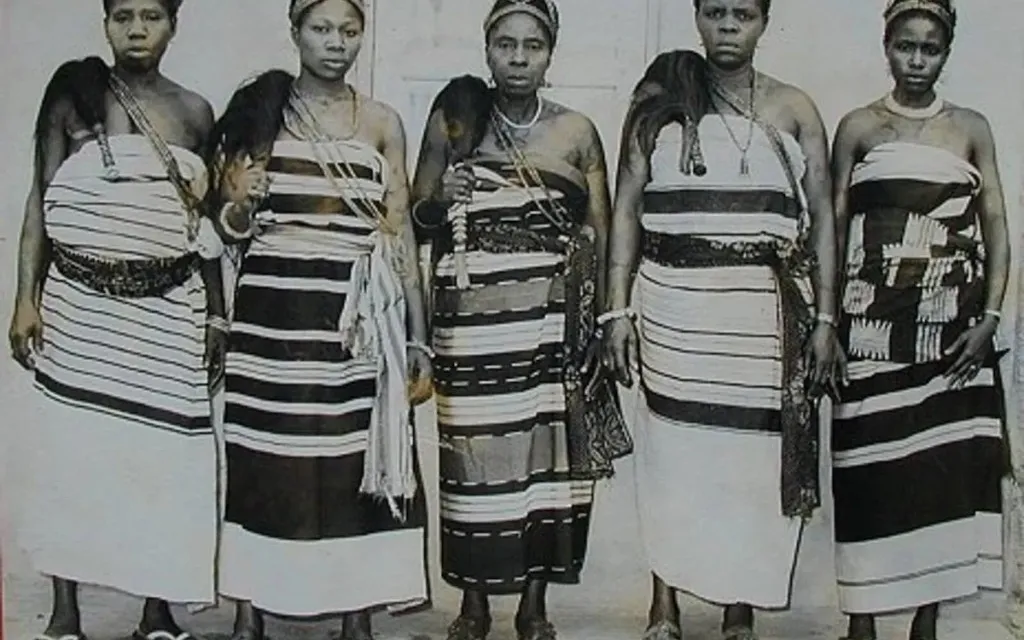
Women of southeastern Nigeria, c. 1929 / Public Domain
In November 1929, thousands of women in southeastern Nigeria rose up against the British colonial government. They did not use weapons. They used their voices, their bodies, and their collective power. What followed was one of the largest and most significant women-led revolts in modern African history. The British called it the "Aba Women's Riots." The women who lived it called it Ogu Umunwaanyi, meaning "the Women's War."
What caused it
To understand why the women revolted, you need to understand what life was like under British colonial rule in southeastern Nigeria.
The British had introduced a system of indirect rule, which meant they governed through local leaders called Warrant Chiefs. These chiefs were not chosen by the community. They were appointed by the colonial government, and many of them abused their power. They imposed taxes, seized property, and punished anyone who challenged them.
In 1928, the colonial government conducted a census of men and their property. When the same kind of counting started happening with women in late 1929, rumours spread quickly: the government was going to start taxing women too. For women who were already struggling under colonial exploitation, this was the breaking point.
The trigger came in late November 1929, in the town of Oloko, near Aba. A widow named Nwanyeruwa was in her compound making palm oil when Mark Emeruwa, an agent of Warrant Chief Okugo, told her to count her goats, sheep, and people. She refused. She asked him whether his own widowed mother had been counted.
That confrontation lit the match.
How the women organised
Nwanyeruwa immediately told other women what had happened. Using networks that already existed through markets, trading routes, and women's gatherings, the message spread faster than the colonial government could have imagined.
Within days, thousands of women converged on Oloko. They demanded that the Warrant Chief be removed and that women would not be taxed. The protest did not stay local. It spread across the Owerri and Calabar provinces, covering an area of roughly 6,000 square miles. At its peak, an estimated 25,000 women were involved.
The women used a traditional practice called "sitting on a man," which was a recognised form of protest in Igbo culture. When a man had wronged the community, women would gather at his home, singing, dancing, and making demands until the issue was resolved. It was not violent. It was powerful, public, and deeply humiliating for the person on the receiving end.
They surrounded the homes and offices of Warrant Chiefs. They dismantled court buildings that symbolised colonial power. They blocked roads. They sang war songs. They demanded to be heard.
How the British responded
The colonial government did not understand what was happening. They had no framework for a women-led uprising of this scale. Their response was confusion followed by violence.
British soldiers opened fire on unarmed women in several locations. At Opobo, soldiers killed more than 30 women. Across the affected areas, at least 55 women were killed and many more were injured. The women had no weapons. They were protesting.
The brutality of the British response only highlighted how threatened the colonial government was by women who refused to be quiet.
What the Women's War achieved
Despite the violence, the women's revolt forced real changes.
The colonial government conducted an investigation. The system of Warrant Chiefs was reformed. Several corrupt chiefs were removed from power. And the plan to tax women was abandoned.
More importantly, the uprising forced the British to acknowledge that women in southeastern Nigeria had political power and organisational ability that they had completely underestimated. The colonial government had assumed that women were politically invisible. The Women's War proved them spectacularly wrong.
The revolt also inspired future generations of activists. Margaret Ekpo, who became one of Nigeria's most important women's rights advocates, was directly inspired by the Aba Women's War. Funmilayo Ransome-Kuti carried on the tradition of women's collective action in her own campaigns in Abeokuta in the 1940s.
Why this story matters today
The Aba Women's War is one of the most important events in Nigerian history, but many young Nigerians have never heard of it. When it does appear in textbooks, it is often reduced to the British term "riots," which makes it sound chaotic and mindless. It was neither. It was organised, strategic, and rooted in long traditions of women's political participation in Igbo society.
This matters for several reasons.
It challenges the idea that African women were passive. The women of 1929 did not wait for men to fight for them. They did not ask permission. They saw injustice and they acted, drawing on their own traditions of collective power.
It shows the importance of networks. The revolt spread across thousands of square miles in a matter of days, without phones, without the internet, without social media. Women used the connections they had built through markets and community life. Those networks were their strength.
It reminds us that protest works. The women did not have weapons or political office. What they had was numbers, courage, and the refusal to be ignored. And it was enough to force the most powerful empire in the world to back down.
It belongs in our history. When we talk about resistance to colonialism in Africa, we often focus on male leaders. But the Aba Women's War shows that women were leading resistance too, on a massive scale, with extraordinary bravery.
What to take away
- The Aba Women's War of 1929 was one of the largest women-led revolts in African history.
- It was sparked by the threat of taxation on women under British colonial rule in southeastern Nigeria.
- Thousands of women organised across a vast area using existing community networks.
- The British responded with violence, killing at least 55 unarmed women.
- The revolt led to real reforms, including the removal of corrupt chiefs and the end of plans to tax women.
- The uprising proved that women in Nigeria had political power and organisational skill that colonisers had dismissed.
- This history deserves to be remembered, taught, and celebrated.
The women of Aba did not call themselves feminists. That word would not have meant much to them. But what they did, standing together and demanding justice at the risk of their lives, is exactly what feminism looks like when it matters most.
Cite this page
HerStory Africa. (2026). The Aba Women's War: When Nigerian Women Took On the British Empire. HerStory Africa. Retrieved October 23, 2026, from https://herstoryafrica.com.ng/articles/the-aba-womens-war
"The Aba Women's War: When Nigerian Women Took On the British Empire." HerStory Africa, 2026, https://herstoryafrica.com.ng/articles/the-aba-womens-war. Accessed 23 Oct 2026.
HerStory Africa. "The Aba Women's War: When Nigerian Women Took On the British Empire." Accessed October 23, 2026. https://herstoryafrica.com.ng/articles/the-aba-womens-war.