The Dahomey Amazons: Africa's All-Female Army
The story of the Mino, a feared all-female military regiment in the Kingdom of Dahomey that challenged European armies and rewrote what women in combat could look like.
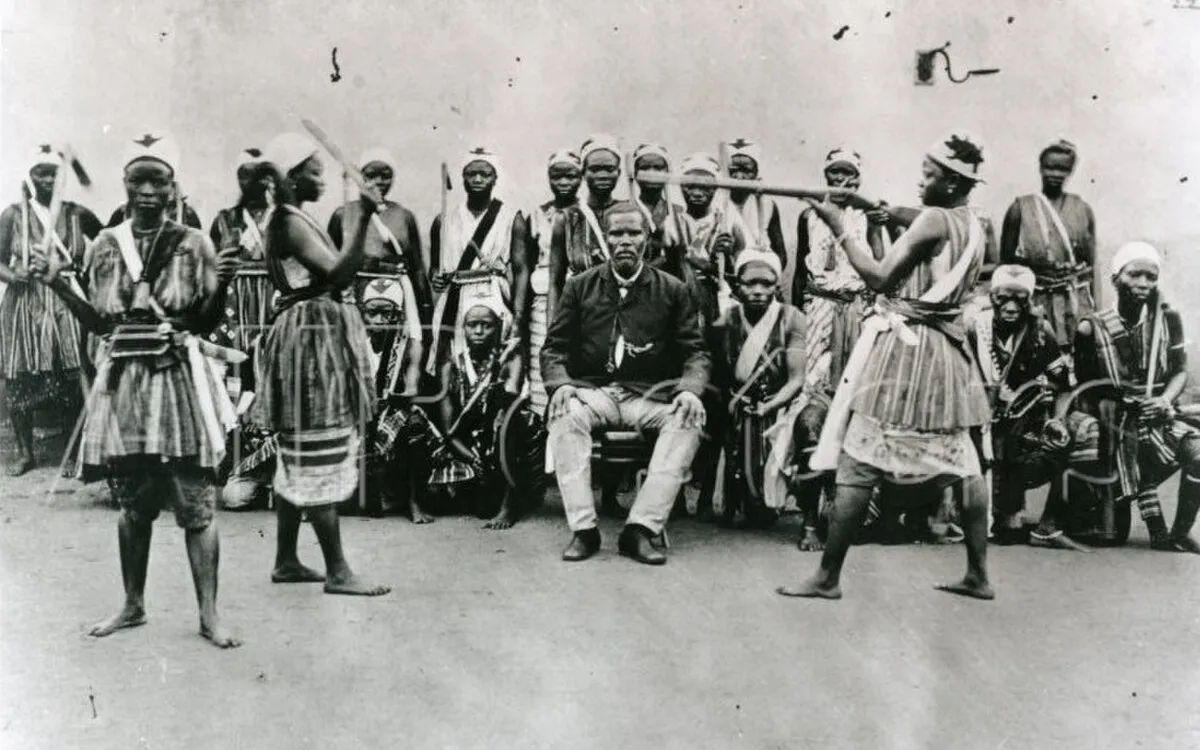
Dahomey Amazons, c. 1890 / Public Domain
Long before any modern army debated whether women should serve in combat, an entire kingdom in West Africa already had the answer. The Kingdom of Dahomey, in what is now the Republic of Benin, maintained an all-female military regiment for nearly 200 years. Europeans called them the Dahomey Amazons. They called themselves the Mino, meaning "our mothers." They were among the most disciplined and feared soldiers in all of Africa.
How it began
The origins of the Mino are debated, but most historians trace them back to the early 1700s. One account suggests they began as a group of female elephant hunters called the Gbeto, whose skill and bravery impressed the king so much that he organised them into a military force. Another version holds that King Ghezo formally expanded and elevated the regiment in the 1840s after suffering heavy losses in wars with neighbouring kingdoms. He needed soldiers and found that the women who volunteered were as capable as any man on the battlefield.
What is not debated is that by the mid-1800s, the Mino were a central part of the Dahomey military. They were not symbolic. They were not ceremonial. They fought, killed, and died in real wars.
Training and discipline
Becoming a Mino was not casual. The training was intense and brutal by any standard.
Recruits were put through physical conditioning that included hand-to-hand combat, weapons training, and endurance exercises. They were trained to scale thorn-covered walls and to fight through pain without flinching. Some accounts describe exercises where recruits had to execute prisoners to prove they could kill without hesitation.
The Mino were expected to be celibate while serving. They lived apart from the general population. They were considered married to the king, which gave them a status in Dahomey society that most women and many men did not have. They had access to alcohol, tobacco, and enslaved servants. They had a voice in the kingdom's grand council.
They carried muskets, machetes, and clubs. They wore uniforms and marched in formation. They trained constantly and were always ready for war.
In battle
European soldiers who fought against the Mino during the Franco-Dahomean Wars in the 1890s left detailed accounts of what they faced. French officers described the Mino as fearless, fast, and relentless. One French soldier wrote that the women fought with a fury he had never encountered. Another noted that the Mino were the last soldiers standing when the male regiments had already retreated.
During the First Franco-Dahomean War in 1890, the Mino played a central role in the defence of Dahomey. In the second war from 1892 to 1894, they were at the front of nearly every major engagement. The French suffered significant casualties before finally defeating Dahomey through sheer numbers and superior weapons technology.
The Mino did not lose because they lacked courage or skill. They lost because muskets and machetes could not hold against artillery and machine guns. Even then, they fought to the very end.
What the Mino tell us
The Dahomey Amazons challenge several assumptions that people still carry today.
The idea that women are not built for combat. The Mino were not exceptions or oddities. They were a standing military force that lasted nearly two centuries. They trained harder than most soldiers anywhere in the world at that time. Their existence is proof that physical capability is not limited by gender when training, discipline, and opportunity are equal.
The idea that women in the military is a modern Western invention. Western countries spent most of the 20th century debating whether women should be allowed in combat roles. Dahomey settled that question in the 1700s. This is not a story of Africa following the West. This is a story of Africa being centuries ahead.
The idea that African history has no surprises left. Most people have never heard of the Mino. This is partly because African history is still undertaught around the world, and partly because stories of powerful African women do not fit the narrative that many textbooks prefer. The Mino do not fit neatly into any box. That is exactly what makes their story important.
Their legacy
The last known surviving Mino veteran, a woman named Nawi, reportedly died in 1979 at the estimated age of over 100. With her, the living memory of the regiment ended. But the legacy has not.
The Mino inspired the 2022 film The Woman King, starring Viola Davis. While the film took creative liberties, it brought the story of the Dahomey Amazons to a global audience and sparked new interest in this chapter of African history.
In Benin today, the Mino are a source of national pride. Their story is taught, celebrated, and honoured as evidence of what women can achieve when a society decides to let them.
What to take away
- The Dahomey Amazons, or Mino, were a real all-female military regiment that served for nearly 200 years in the Kingdom of Dahomey.
- They were rigorously trained, fiercely disciplined, and respected as some of the most effective soldiers in West Africa.
- European soldiers who fought them described them as fearless and formidable.
- Their existence disproves the notion that women in combat is a modern or Western idea.
- The Mino are a powerful reminder that African history is full of stories that challenge the world's assumptions about what women can do.
The next time someone says women do not belong on the battlefield, or that women have always needed men to protect them, remember the Mino. They did not need anyone's protection. They were the protection.
Cite this page
HerStory Africa. (2026). The Dahomey Amazons: Africa's All-Female Army. HerStory Africa. Retrieved October 23, 2026, from https://herstoryafrica.com.ng/articles/the-dahomey-amazons
"The Dahomey Amazons: Africa's All-Female Army." HerStory Africa, 2026, https://herstoryafrica.com.ng/articles/the-dahomey-amazons. Accessed 23 Oct 2026.
HerStory Africa. "The Dahomey Amazons: Africa's All-Female Army." Accessed October 23, 2026. https://herstoryafrica.com.ng/articles/the-dahomey-amazons.