The Women's March of 1956: When 20,000 Women Shook Pretoria
How 20,000 South African women of all races marched to the Union Buildings in Pretoria to protest the pass laws, creating one of the most powerful moments in anti-apartheid history.
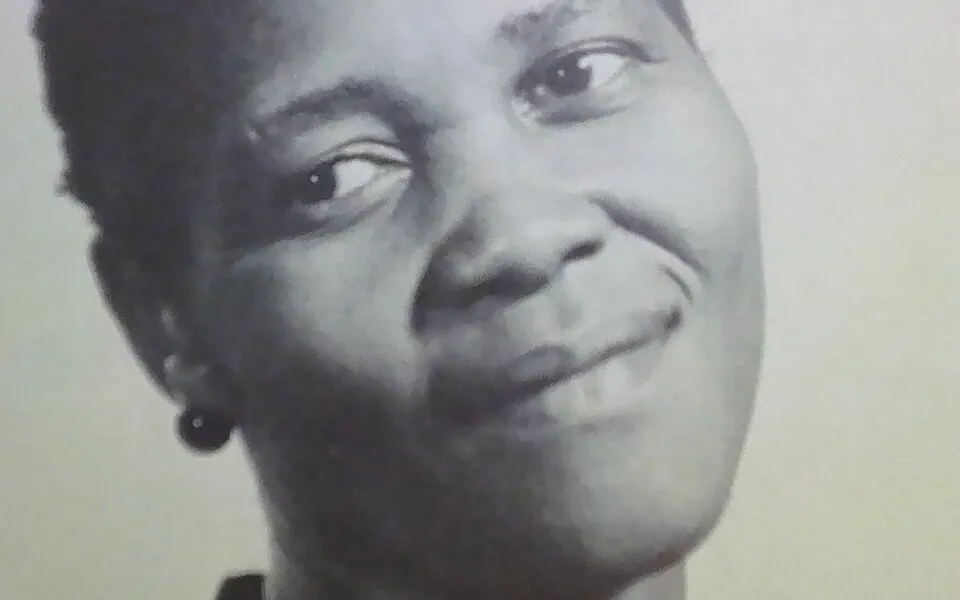
Lilian Ngoyi, anti-apartheid activist / Wikimedia Commons
On August 9, 1956, approximately 20,000 women marched to the Union Buildings in Pretoria, the seat of South Africa's apartheid government. They came from every corner of the country. They were Black, Coloured, Indian, and white. They were domestic workers, teachers, nurses, factory workers, and mothers. They came to deliver a message that the government did not want to hear: women would not carry passes.
That day became one of the defining moments of the anti-apartheid struggle, and August 9 is now celebrated in South Africa as National Women's Day.
What were the pass laws?
Under apartheid, the South African government controlled where Black people could live, work, and travel through a system of pass laws. Every Black man was required to carry a "reference book" at all times. This book contained personal information, employment details, and permission stamps from employers and government officials. Being caught without a pass meant arrest, fines, or imprisonment.
For years, the pass laws applied only to men. But in the 1950s, the apartheid government decided to extend them to women. This was not just an administrative change. It meant that Black women would now be subject to the same humiliation, restriction, and threat of arrest that Black men had endured for decades. It meant that a woman going to the market, visiting her family, or walking to church could be stopped, searched, and jailed.
Women across the country said no.
The women who led it
The march was organised by the Federation of South African Women, known as FEDSAW. Four women were at the heart of the planning.
Lilian Ngoyi was a former garment worker who had become one of the most powerful orators in the anti-apartheid movement. She was fearless. She had already been arrested multiple times and would go on to spend years under banning orders that restricted her movement and her speech. But on that day in August, she led from the front.
Albertina Sisulu was a nurse, a mother, and the wife of ANC leader Walter Sisulu. She spent decades fighting apartheid while raising her children, often alone because her husband was imprisoned or on the run. She was one of the organisers who held the movement together behind the scenes.
Helen Joseph was a white South African woman who had committed her life to fighting racial injustice. She drove across the country in the weeks before the march, delivering petitions and rallying women. She was later the first person to be placed under house arrest by the apartheid government.
Sophia Williams-De Bruyn was a young Coloured woman and trade unionist who helped organise Indian and Coloured women for the march. She was only 18 at the time but already deeply involved in the struggle.
Together, these four women represented what the march was about: unity across racial lines in the face of a government that wanted to keep people divided.
The day itself
The logistics alone were extraordinary. In the 1950s, there were no mobile phones, no social media, no mass email. Organising 20,000 women from across a country the size of South Africa, many of them poor and without reliable transport, required months of planning, word of mouth, and raw determination.
Women travelled by bus, by train, by car, and on foot. Some brought their babies. Some had never been to Pretoria before. When they arrived at the Union Buildings, they stood in silence.
That silence was deliberate. Twenty thousand women, standing together, not shouting, not chanting, but waiting. The petitions they carried, containing over 100,000 signatures, were left at the door of Prime Minister J.G. Strijdom. He refused to meet them.
Then the silence broke. The women began to sing: "Wathint' abafazi, wathint' imbokodo." You strike the women, you strike a rock.
That phrase became one of the most famous slogans of the anti-apartheid movement. It was not a threat. It was a statement of fact. The women were telling the government: we are immovable. You will not break us.
What happened after
The apartheid government did not cancel the pass laws. In the years that followed, the laws were enforced with increasing brutality. Millions of Black women were forced to carry passes.
But the march changed something that laws alone could not. It showed the government that women were a political force. It demonstrated that resistance was not limited to men. And it gave the anti-apartheid movement a moment of unity and courage that inspired decades of continued struggle.
Lilian Ngoyi was banned, confined to her home for years, and barred from attending gatherings or being quoted in the press. Albertina Sisulu was detained, harassed, and watched by the state for decades. Winnie Madikizela-Mandela, who was inspired by the generation of women who marched, carried the torch forward through her own suffering and resistance.
None of them stopped. The march did not end on August 9, 1956. It continued in kitchens, in courtrooms, in prison cells, and on the streets for another 38 years until apartheid finally fell.
Why this day matters
South Africa chose to make August 9 a public holiday not just to remember a historical event but to honour the principle behind it: that women's resistance matters, that women's courage changes history, and that justice requires everyone's participation.
The Women's March of 1956 was not a footnote in the anti-apartheid story. It was a turning point. It proved that when women organise across racial lines, across class lines, and across fear, they become exactly what that song said: a rock that cannot be moved.
What to take away
- In 1956, 20,000 South African women of all races marched to Pretoria to protest the extension of pass laws to women.
- The march was organised by Lilian Ngoyi, Albertina Sisulu, Helen Joseph, and Sophia Williams-De Bruyn.
- The women stood in silence before singing the now-famous words: "You strike the women, you strike a rock."
- The pass laws were not immediately repealed, but the march galvanised the anti-apartheid movement and proved that women were a powerful political force.
- August 9 is now celebrated as National Women's Day in South Africa.
- The courage of these women continues to inspire movements for justice across the continent and the world.
They came from everywhere. They stood together. And they made sure that no one, not even an entire government, could pretend they did not exist.
Cite this page
HerStory Africa. (2026). The Women's March of 1956: When 20,000 Women Shook Pretoria. HerStory Africa. Retrieved October 23, 2026, from https://herstoryafrica.com.ng/articles/the-womens-march-of-1956
"The Women's March of 1956: When 20,000 Women Shook Pretoria." HerStory Africa, 2026, https://herstoryafrica.com.ng/articles/the-womens-march-of-1956. Accessed 23 Oct 2026.
HerStory Africa. "The Women's March of 1956: When 20,000 Women Shook Pretoria." Accessed October 23, 2026. https://herstoryafrica.com.ng/articles/the-womens-march-of-1956.