Why Men Who Support Women Are Not Weak
Challenging the idea that supporting gender equality makes a man less of a man, and showing why male allyship has always been part of the fight for justice.
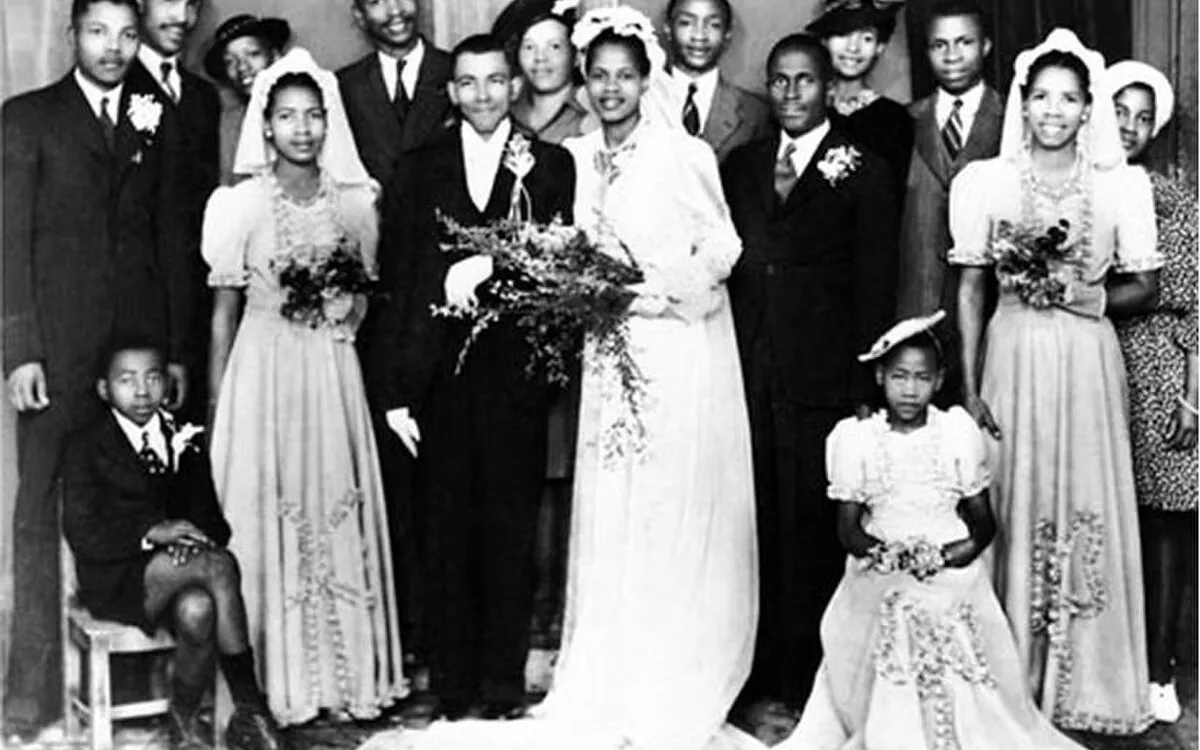
The Sisulu wedding with Nelson Mandela and Anton Lembede, 1944 / Public Domain
There is a persistent idea in many communities that a man who supports women's rights is somehow less of a man. That he is soft. That he is trying to please women. That he has been "feminised." This idea shows up in jokes, in arguments, and in the way boys are socialised from a young age. And it is one of the most damaging myths standing in the way of gender equality.
Because the truth is that men who support women are not weak. They are doing exactly what strong, thoughtful people do: standing on the right side of justice.
Where the myth comes from
The idea that supporting women makes a man weak is rooted in how many societies define masculinity. In much of the world, and across many African cultures, masculinity is associated with dominance, control, and emotional suppression. A "real man" is one who leads, who does not cry, who is never vulnerable, and who is always in charge.
Under this definition, anything that challenges male authority is seen as a threat. If a man agrees that women should have equal opportunities, he is "giving up" power. If he listens to women's perspectives, he is "whipped." If he does housework or cares for children, he is doing "women's work." The logic is circular: anything a man does that is associated with women becomes beneath him, which keeps women's roles devalued.
This definition of masculinity is not just unfair to women. It is suffocating for men. It tells boys that half of their humanity, the half that feels, that cares, that connects, is off limits. And it tells them that the only way to be respected is to dominate.
What real strength looks like
It takes very little courage to follow the crowd. If everyone around you says women should stay in their place and you agree, you have not demonstrated strength. You have demonstrated compliance.
Real strength is the willingness to think for yourself, even when it is unpopular. It is standing next to someone who is being treated unfairly and saying "this is wrong" even when staying silent would be easier. It is recognising that equality does not threaten you because your value was never based on someone else having less.
Some of the strongest men in African history understood this.
Nelson Mandela consistently spoke about the importance of women's rights. He said: "Freedom cannot be achieved unless women have been emancipated from all forms of oppression." He did not see supporting women as weakness. He saw it as an inseparable part of justice.
Thomas Sankara, the president of Burkina Faso in the 1980s, was one of Africa's most vocal male advocates for women's rights. He banned forced marriage, promoted women's education, and appointed women to government positions. He said: "There is no true social revolution without the liberation of women." He was not called weak for this. He was called revolutionary.
Walter Sisulu, husband of Albertina Sisulu, was a leader in the ANC who deeply respected his wife's activism and intelligence. Their partnership was built on mutual respect, not on one person dominating the other.
These men did not lose their identity by supporting women. They expanded it.
What male allyship actually looks like
Being an ally is not about grand gestures or public declarations. It shows up in everyday behaviour.
Listening without dismissing. When a woman tells you about her experience of being catcalled, underpaid, or talked over, believe her. Do not explain it away, minimise it, or redirect the conversation to how hard things are for men too. Her experience is valid on its own.
Sharing space. If you are in a meeting and you notice that women are being interrupted or ignored, make space for them. This is not about being a saviour. It is about fairness in a room you are already in.
Doing your share at home. If you live with women, whether that is your mother, sister, partner, or housemate, do your share of housework and care tasks without being asked and without expecting praise. It is not "helping." It is living as an equal.
Challenging other men. This is one of the most important things a male ally can do. When your friends make sexist jokes, when your colleagues dismiss a woman's idea, when your family insists that your sister cannot have the same opportunities as you, say something. Men listen to other men in ways they often do not listen to women. Use that influence.
Educating yourself. Do not expect the women in your life to teach you everything about gender equality. Read. Listen. Learn. The information is available. Taking the initiative to understand the issues shows that you take them seriously.
Supporting women's leadership. When a woman runs for office, starts a business, or takes on a leadership role, support her the way you would support a man doing the same thing. If your instinct is to question whether she can handle it, ask yourself whether you would have the same doubt about a man.
Why this benefits men too
Gender equality is not a zero-sum game. When women gain rights and opportunities, men benefit too. Here is how.
Better relationships. Partnerships built on equality are healthier, more satisfying, and more durable than those built on domination. When both people in a relationship feel respected and free, the relationship works better.
Better mental health. The pressure to be dominant, unemotional, and always in control is a major factor in men's mental health problems. Men who embrace a wider definition of masculinity, one that allows vulnerability, connection, and honesty, report better wellbeing.
Shared responsibility. The expectation that men must be the sole providers puts enormous financial pressure on them. When women earn equally and share in financial responsibility, that burden is halved. That is not weakness. That is common sense.
Stronger communities. Communities where women are educated, employed, and empowered are safer, healthier, and more prosperous. Men live in those communities too. Their quality of life improves alongside women's.
The boys watching
Perhaps the most important reason to reject the idea that supporting women is weak is this: there are boys watching.
Boys who grow up seeing their fathers respect their mothers will learn what respectful partnership looks like. Boys who see men stand up against sexism will learn that it is not something to tolerate. Boys who are taught that strength includes kindness, empathy, and fairness will grow into men who do not need to dominate anyone to feel secure.
The cycle of toxic masculinity breaks when men choose to break it. And every boy who sees a man choosing equality over dominance has a better chance of making the same choice.
What to take away
- The idea that supporting women makes a man weak is a myth rooted in rigid and harmful definitions of masculinity.
- Real strength includes the courage to stand for justice, even when it is unpopular.
- African leaders like Nelson Mandela and Thomas Sankara saw women's equality as inseparable from true freedom.
- Male allyship shows up in listening, sharing responsibility, challenging sexism, and supporting women's leadership in everyday life.
- Gender equality benefits men through better relationships, better mental health, shared financial responsibility, and stronger communities.
- Boys learn masculinity by watching the men around them. What they see shapes who they become.
Being a man who supports women is not about losing power. It is about understanding that power was never meant to be held over another person. It was meant to be shared. And sharing it is the strongest thing you can do.
Cite this page
HerStory Africa. (2026). Why Men Who Support Women Are Not Weak. HerStory Africa. Retrieved October 23, 2026, from https://herstoryafrica.com.ng/articles/why-men-who-support-women-are-not-weak
"Why Men Who Support Women Are Not Weak." HerStory Africa, 2026, https://herstoryafrica.com.ng/articles/why-men-who-support-women-are-not-weak. Accessed 23 Oct 2026.
HerStory Africa. "Why Men Who Support Women Are Not Weak." Accessed October 23, 2026. https://herstoryafrica.com.ng/articles/why-men-who-support-women-are-not-weak.