Who Is a Feminist and Why We All Should Be
A simple, honest breakdown of what it means to be a feminist, why it matters for everyone, and how African women have been leading the way for generations.
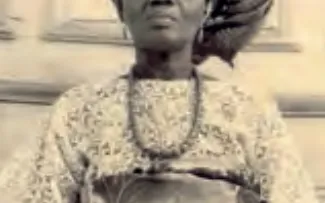
Funmilayo Ransome-Kuti at 70 / Public Domain
Imagine a world where your sister is told she cannot go to school because she is a girl. Or where your mother works just as hard as your father but gets paid less for the same job. Or where a girl in your class has a brilliant idea but nobody listens because "girls should be quiet." If any of that sounds unfair to you, congratulations. You already think like a feminist.
So what exactly is a feminist?
A feminist is anyone who believes that women and men deserve the same rights, the same opportunities, and the same respect. That is it. It is not about women being better than men. It is not about anger or bitterness. It is about fairness.
The word "feminism" can feel heavy or confusing because people have attached all kinds of meaning to it over the years. But at its core, feminism is one of the simplest ideas in the world: no one should be treated as less because of their gender.
Think of it this way. If you believe a girl should be allowed to go to school, you agree with feminism. If you believe a woman should be able to own property, start a business, or run for president, you agree with feminism. If you believe boys and men should not be mocked for showing emotion or being kind, you agree with feminism too. Because feminism is not just about women. It is about removing the unfair rules that society places on people based on whether they are male or female.
Why does this matter for young people?
Because the world you are growing up in was shaped by decisions about gender that were made long before you were born. In many African countries, laws once prevented women from voting, owning land, or even travelling without a man's permission. Some of those laws have changed. Some have not. And even where the laws have changed, the attitudes behind them can be slow to follow.
When a girl is told to focus on marriage instead of her education, that is a leftover from a time when women were not expected to have careers. When a boy is told that "real men don't cry," that is another kind of gender rule that limits who he is allowed to be. Feminism challenges all of these boxes.
You do not have to wait until you are an adult to care about this. Young people have always been at the heart of movements for change. Understanding feminism now means you can spot unfairness when you see it and choose not to repeat it.
African women have been feminists for centuries
Feminism is sometimes presented as a Western idea that was imported to Africa. That is not true. African women have been fighting for their rights and their communities for hundreds of years, long before the word "feminism" existed.
Yaa Asantewaa led a war against British colonisers in present-day Ghana in 1900. She did not wait for permission. She saw her people being oppressed and she acted, rallying an entire army when the men around her hesitated.

Funmilayo Ransome-Kuti organised thousands of women in Nigeria to protest against unfair taxes and demand political representation in the 1940s. She was not fighting men. She was fighting a system that excluded women from decisions that affected their lives.
Wangari Maathai in Kenya stood up against environmental destruction and political corruption, winning the Nobel Peace Prize in 2004. She was beaten, arrested, and ridiculed. But she kept going because she believed women had just as much right to protect their land and their future.
These women were feminists in action. They believed in equality. They fought for it. And we are all living with the benefits of what they achieved.
But I heard feminism is about hating men
This is probably the biggest misunderstanding about feminism, and it is worth addressing head on.
Feminism does not mean hating men. Some people who call themselves feminists may say hurtful things about men, just like some people in any group can be extreme. But the actions of a few do not define what the whole movement stands for.
Think about it like this. If someone who loves football says something rude, that does not mean football is about being rude. You judge a movement by its principles, not by its loudest or most extreme voices.
The principle of feminism is equality. And equality helps everyone. When women are educated, families do better. When mothers earn fair wages, children have more opportunities. When girls are safe in their communities, the whole community is stronger. And when boys are free from pressure to be tough and emotionless, they grow into healthier and happier men.
Feminism is not women against men. It is everyone against inequality.
What does being a feminist look like in everyday life?
You do not need to lead a protest or give speeches to be a feminist. Being a feminist shows up in small, everyday choices.
It looks like a brother doing dishes without being asked, because housework is not "women's work." It is just work.
It looks like a father encouraging his daughter to study engineering if that is what she loves, instead of steering her toward something "more suitable for girls."
It looks like a boy standing up for a girl who is being harassed, not because she is weak, but because it is the right thing to do.
It looks like a girl knowing that she can speak up in class, aim for leadership, and take up space without apologising for it.
It looks like questioning traditions that harm people rather than accepting them just because "that is how things have always been."
Can boys and men be feminists?
Absolutely. Some of the strongest allies in the fight for gender equality have been men. Nelson Mandela spoke about the importance of women's rights throughout his life. Many male leaders, teachers, fathers, and brothers across Africa support equality every day in ways big and small.
Being a male feminist does not mean giving up your identity or pretending gender differences do not exist. It means recognising that the systems we grew up with were not always fair, and choosing to be part of making things better.
If you are a boy or a man reading this, feminism is not asking you to feel guilty. It is asking you to be fair. And fairness is something to be proud of.
Why we all should be feminists
Nigerian author Chimamanda Ngozi Adichie gave a famous talk called "We Should All Be Feminists," and the title says it all. Here is why.
Because talent has no gender. When we limit what girls can do or what boys are allowed to feel, we lose out on the full potential of half the population. Imagine how many brilliant scientists, leaders, artists, and innovators the world has missed simply because they were born female in a place or time that told them to sit down and be quiet.
Because the world is better when it is fair. Countries with more gender equality tend to be more peaceful, more prosperous, and healthier. This is not opinion. It is backed by research from organisations like the United Nations and the African Union.
Because our mothers, sisters, and daughters deserve it. Every woman in your life has faced some form of unfair treatment because of her gender. It might have been something as small as being talked over in a meeting or as serious as being denied an education. Feminism says that none of that is acceptable.
Because African women have always led the way. From Queen Nzinga who resisted Portuguese colonisation in the 1600s to Ngozi Okonjo-Iweala leading the World Trade Organisation today, African women have been proving what is possible when they are given the chance. Imagine what the next generation could achieve if every girl grew up knowing she could do the same.
What to take away
- A feminist is simply someone who believes in equality between women and men.
- Feminism is not about hating men. It is about changing unfair systems.
- African women have been fighting for equality for centuries. This is not a new or foreign idea.
- Boys and men can and should be feminists. Equality benefits everyone.
- You do not need to be an activist to be a feminist. Small everyday choices matter.
- The world is genuinely better when everyone has a fair chance to succeed.
The next time someone asks you "Are you a feminist?" you can answer with a simple question of your own: "Do you believe in fairness?" If the answer is yes, then you already are one too.
Cite this page
HerStory Africa. (2026). Who Is a Feminist and Why We All Should Be. HerStory Africa. Retrieved October 23, 2026, from https://herstoryafrica.com.ng/articles/who-is-a-feminist-and-why-we-all-should-be
"Who Is a Feminist and Why We All Should Be." HerStory Africa, 2026, https://herstoryafrica.com.ng/articles/who-is-a-feminist-and-why-we-all-should-be. Accessed 23 Oct 2026.
HerStory Africa. "Who Is a Feminist and Why We All Should Be." Accessed October 23, 2026. https://herstoryafrica.com.ng/articles/who-is-a-feminist-and-why-we-all-should-be.